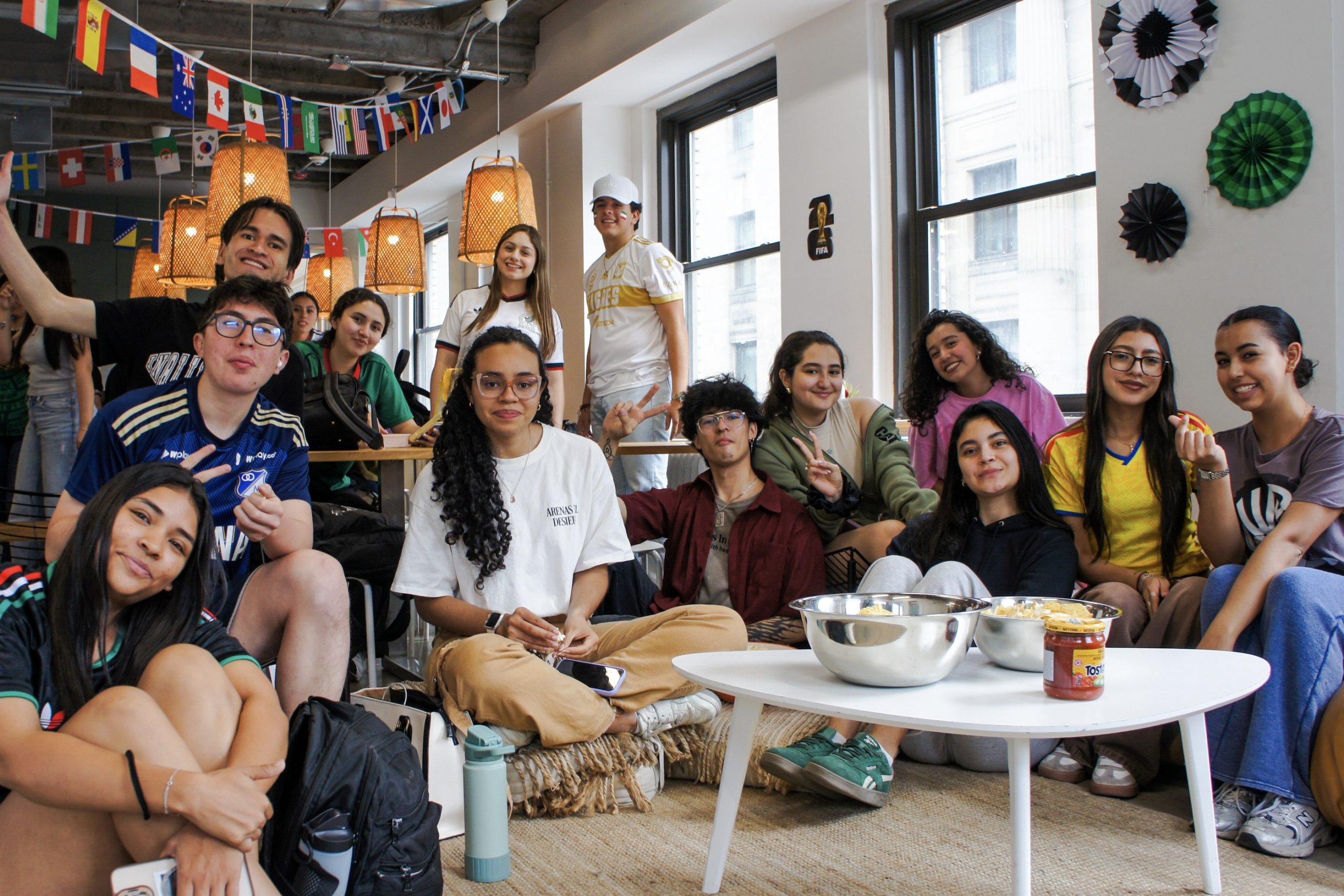
You’ve scored the experience of a lifetime: living in Canada during a FIFA World Cup. But when the stadium erupts and everyone around you is shouting things you don’t quite understand, you want to be part of that moment, not on the sidelines of it. Whether you’re here on a working holiday visa, a student exchange program, or as an international student, knowing the right soccer vocabulary in English and French is your ticket into one of the most electric social events Canada has ever hosted.
Why the 2026 World Cup is a language opportunity you can’t miss
The 2026 FIFA World Cup is being co-hosted by Canada, the United States, and Mexico, and Canadian cities like Toronto and Vancouver are right at the center of it. For anyone living the cultural exchange dream, this isn’t just a sporting event. It’s a crash course in how Canadians celebrate, connect, and express themselves.
Here’s something worth knowing about Canada: it’s officially bilingual. Walk into a sports bar in Montreal and you’ll hear both English and French flying around the room, sometimes in the same sentence. Understanding soccer vocabulary in both languages means you can follow the action, join the conversation, and connect with locals on a whole new level. That’s what cultural immersion actually looks like.
The essential soccer vocabulary every fan needs in English
Let’s start with the basics. In Canada (and unlike in much of the world), the sport is most commonly called soccer, not football. Here are the key terms you’ll hear:
- The pitch — the playing field
- Kickoff — the moment the match begins
- Offside — when an attacking player is ahead of the last defender when the ball is played to them (one of the most debated calls in the game)
- Header — when a player uses their head to direct the ball
- Clean sheet — when a goalkeeper doesn’t concede a single goal
- Stoppage time / injury time — extra minutes added at the end of each half
- Penalty shootout — the dramatic tiebreaker when scores are level after extra time
- The back of the net — an expression meaning the ball went in; “He buried it in the back of the net!”
- A worldie — slang for a spectacular, jaw-dropping goal
And a few fan expressions you’ll definitely hear in the stands or at a watch party:
- “What a strike!” — admiring a great shot
- “He was miles offside!” — a fan arguing a call
- “Come on, ref!” — classic frustration at the referee
French soccer vocabulary you’ll actually hear in Canada
Now let’s switch to French. In Quebec, and especially in Montreal, soccer fans follow the game passionately, and the soccer vocabulary in French is its own world. Here’s what you need to know:
- Le foot / le soccer — both are used; le foot is more common among Francophones from Europe, while le soccer is the Quebec standard
- Le ballon — the ball (not la balle, which refers to smaller balls in other sports)
- Le gardien (de but) — the goalkeeper
- Un tir — a shot on goal
- Un coup franc — a free kick
- Un penalty — a penalty kick (same word, French pronunciation)
- Le hors-jeu — offside
- Marquer un but — to score a goal
- L’arbitre — the referee
- La mi-temps — halftime
Some expressions you’ll hear Québécois fans shout:
- “C’est dans le filet!” — “It’s in the net!”
- “Quelle belle passe!” — “What a beautiful pass!”
- “Allez!” — “Let’s go!” / “Come on!”
- “C’est pas possible!” — the universal sound of disbelief at a missed opportunity
If you can sprinkle a few of these into conversation with local fans, expect smiles and instant connection.
How to actually use this vocabulary in real life
Reading a vocabulary list is one thing. Using it confidently in a crowded bar or stadium is another. Here’s how to make the language stick before and during the tournament:
Watch matches with local commentary. Seek out French-language broadcasts on RDS or TVA Sports. Even if you only catch one in three words, your ear will calibrate to the rhythm of soccer French fast.
Go to watch parties. Cities across Canada will have fan zones and community screenings. These are low-pressure environments where enthusiasm brings fluency, the perfect place to test your new vocabulary.
Learn the players’ names in both languages. Commentators pronounce international names differently in French and English, and being able to follow who scored is half the battle.
Use flashcards for the positions: l’attaquant (forward), le milieu de terrain (midfielder), le défenseur (defender), le gardien (goalkeeper). These come up constantly.
For international students and those on student exchange programs looking to accelerate their language progress before or during the tournament, ATPAL Language School in Montreal offers English and French courses that are built around real-life communication, exactly the kind of practice that turns vocabulary lists into genuine fluency.
Bilingual fan phrases to impress at any watch party
To help you bring both languages together, here are some bilingual phrases you can mix and match depending on your crowd:
| English | French |
| What a goal! | Quel but! |
| Incredible save! | Arrêt incroyable! |
| That was offside! | C’était hors-jeu! |
| Let’s go, Canada! | Allez le Canada! |
| What a match! | Quel match! |
| Did you see that? | T’as vu ça? |
Canada’s national team will be playing on home soil for only the second time in a World Cup. The atmosphere around these matches is going to be unlike anything the country has seen before. Walking into that atmosphere with a working bilingual soccer vocabulary in English and French — even a basic one — transforms you from a spectator into a genuine participant in the experience. And for any international student or student exchange visitor who arrived here wanting full cultural immersion, this is exactly what that looks like.
Start Practicing Before the Whistle Blows
The fans around you will be passionate, fast-talking, and fully in the moment, in both of Canada’s official languages. The good news is that soccer vocabulary is a surprisingly manageable slice of language learning: a few dozen terms get you very far, very quickly.
So start with the list above. Watch a match in French. Try one phrase at a table of strangers. You’ll be surprised how fast “C’est dans le filet!” feels completely natural coming out of your mouth.
Follow us on Instagram, TikTok and Youtube (@atpalcanada) for more language tips, World Cup content, and behind-the-scenes looks at life in Montreal. We’ll be posting all the way through the tournament.
Allez! Let’s go!